Effective Storage and Organization for LEGO Collections
Storing all your loose LEGO parts can be challenging. I’ll share how to organize, sort, and label thousands of pieces, including three effective category systems you can use.
Storage
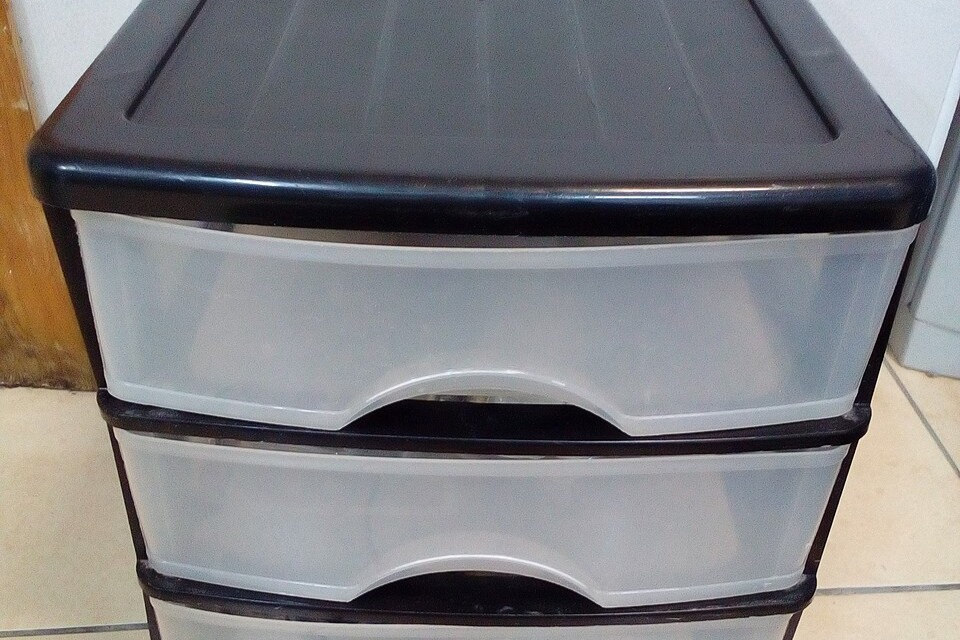
LEGO parts can be stored in bins, drawers, or bags depending upon how much you separate parts and colors. The majority of my LEGO collection is kept in plastic Sterilite drawers, but I also use different brands of plastic drawers for smaller pieces such as thrifted makeup drawers. I use cardboard boxes that are cut to fit from food containers, such as cereal boxes, to arrange parts inside the drawers. I use three different sizes of Sterilite drawers: large stacked 6 drawers high, medium piled 20 drawers high, and small stacked 11 drawers high on bookshelves. Stacked too high the drawers have a hard time bearing weight.
Any kind of tall shelving, whether made of wood or plastic resin, can be used to store ongoing projects or displaying finished builds.
Categories
Sorting by color may be aesthetically pleasing, but unless you’re organizing for young children, it usually makes finding pieces more difficult and isn’t the greatest for building rapidly. Faster identification of specific parts is made possible by sorting by part type such as grouping bricks, plates, slopes, minifigures, accessories, etc.
Here are three category systems you can use:
Option 1
- Bricks: Basic LEGO bricks like 2×4, 1×2, and other shapes
- Plates: Flat parts with studs
- Tiles: Smooth plates
- Minifigures: All minifigure parts including bodies, heads, accessories, and hair
- Wheels & Axles: Wheels, tires, and axles for vehicles
- Technical Parts: LEGO Technic pieces such as beams, gears, connectors
- Specialty Parts: Unique pieces like windows, doors, and special shapes
- Accessories & Decorations: Weapons, tools, and decorative elements
- Baseplates: Large foundation plates including themed baseplates
Option 2
- Bricks: Standard bricks in all sizes and colors
- Plates: Flat parts with studs
- Tiles: Smooth plates
- Minifigures: Figures, hats, plumes, etc
- Accessories: Tools, weapons, and minifigure items
- Vehicles: Cars, trucks, planes, boats, etc.
- Buildings: Walls, doors, windows, roofs
- Trees and Plants: Nature pieces for landscaping
- Specialized Pieces: Unique parts like decorations or Technic pieces
- Animals: LEGO animals and pets
- Mechanics: Gears, axles, and moving parts
- Baseplates: Large building foundation plates
- Bricks with Prints: Pieces with designs or stickers
- New Arrivals: Recently added pieces
- Miscellaneous: Pieces that don’t fit other categories
Option 3
- Minifigures
- Accessories: Tools, weapons, minifigure items
- Bricks – Modified Bricks
- Plates 1×3, 1×4, 1×6, etc.
- Plates 2×2, 2×3, 2×4, etc.
- Plates 3×3 or larger
- Modified Plates
- Tiles
- Wedges
- Slopes
- Miscellaneous: Pieces that don’t fit other categories
- Miscellaneous Large Pieces: Big pieces that don’t fit standard drawers
- Curved and Arched Parts
- Technic
- Animals
- Baseplates
- Parts with Stickers
You can come up with your own categories based on how you build. These categories could be based on anything, like parts for houses, parts from specific themes, for example, pirate sets. The key is to use categories that help you find the part you need the fastest.
Sorting by part type, color, mold, and variant sounds idyllic but is hard to maintain long term. I don’t separate older or faded bricks to save space and keep it simple. Whether to mix colors or variants is up to you. For example if you have both colors, Light Gray and Light Bluish Gray can be stored separately or together to make sorting easier.
Labeling
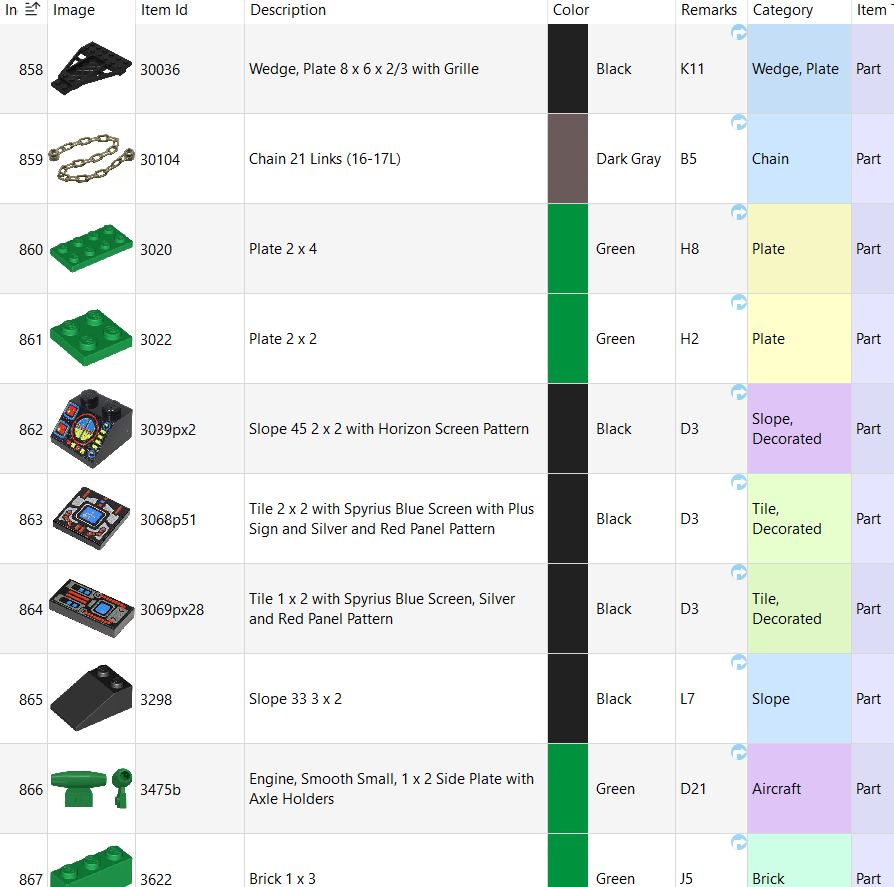
I keep a digital inventory with BrickStore and use an alphanumeric system for the drawers. I find it’s simple to check the location when I can’t find a part.
On the drawers I use Avery labels, which have free downloadable templates for printing. For labels I assign a letter and number for each drawer. The letter represents the category and the number represents the drawer. I use Avery sheets to print labels with the letter and number, followed by another label that describes the contents, such as doors, arches, minifigures, etc. When you run out of room, this labeling system also makes it so you can add in a drawer in the middle and just move the alphanumeric labels up a drawer. The labels are easy to peel and stick on again.
It takes work to sort out parts, but It is worth it if you find you have trouble finding the parts you need for a build. If you’ve tried these methods of organizing your LEGO parts, please let me know in the comments.